Sun damage and age spots, targeted at the source by the 755nm Alexandrite wavelength. Bookable directly. Your first laser visit is a free consultation and patch test, with treatment beginning at least 48 hours later.
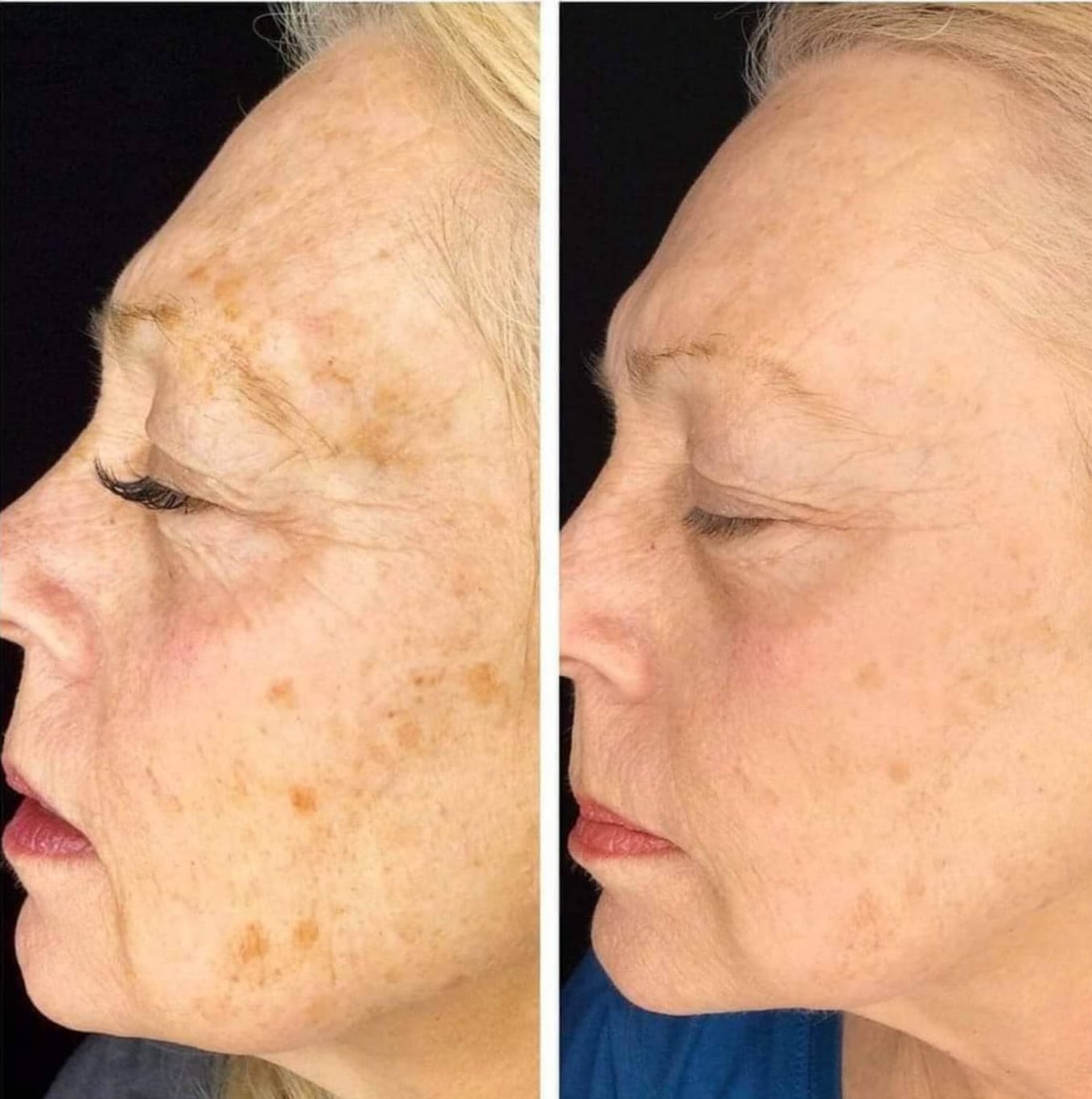
Brown spots, sun damage and solar lentigines on the face, hands and chest. The 755nm Alexandrite wavelength of the Candela GentleMax Pro PLUS is absorbed selectively by melanin — the pigment fragments without damaging the surrounding skin.
Treatment is fast. Most facial sessions take 15 to 30 minutes and built-in cooling keeps each pulse comfortable. Visible improvement is usually seen within one to three sessions, with the best results coming from a course of three spaced four to six weeks apart.
A short consultation comes first. We assess your skin type and the specific pigmentation you're hoping to treat, then plan the right approach for your situation.
Daily SPF 30+ is essential after treatment and as ongoing protection. Without it, new pigmentation can develop in treated areas as sun exposure continues.
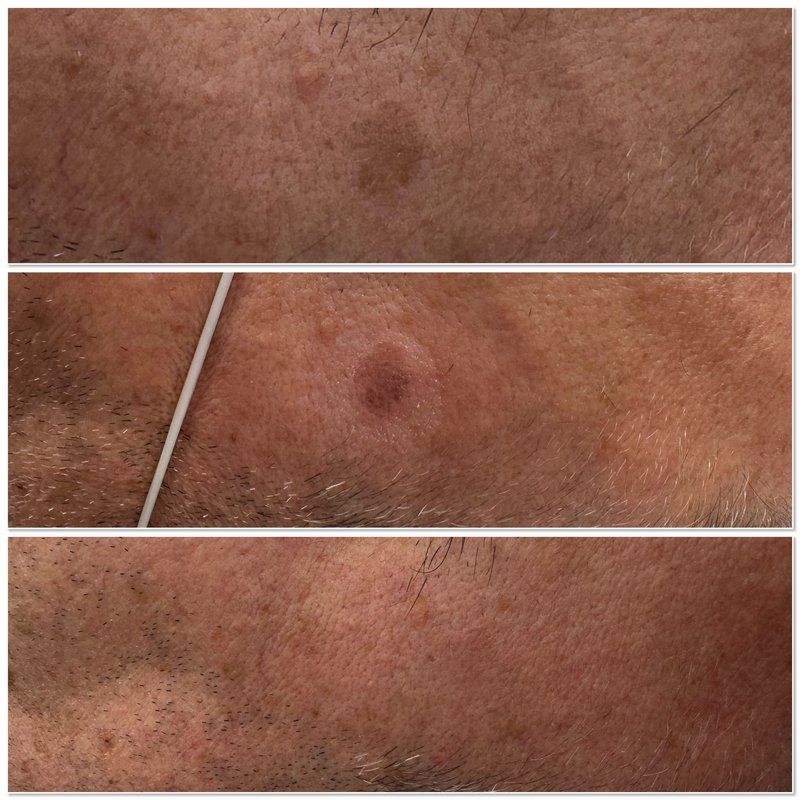
Sample clinical result — individual outcomes vary.
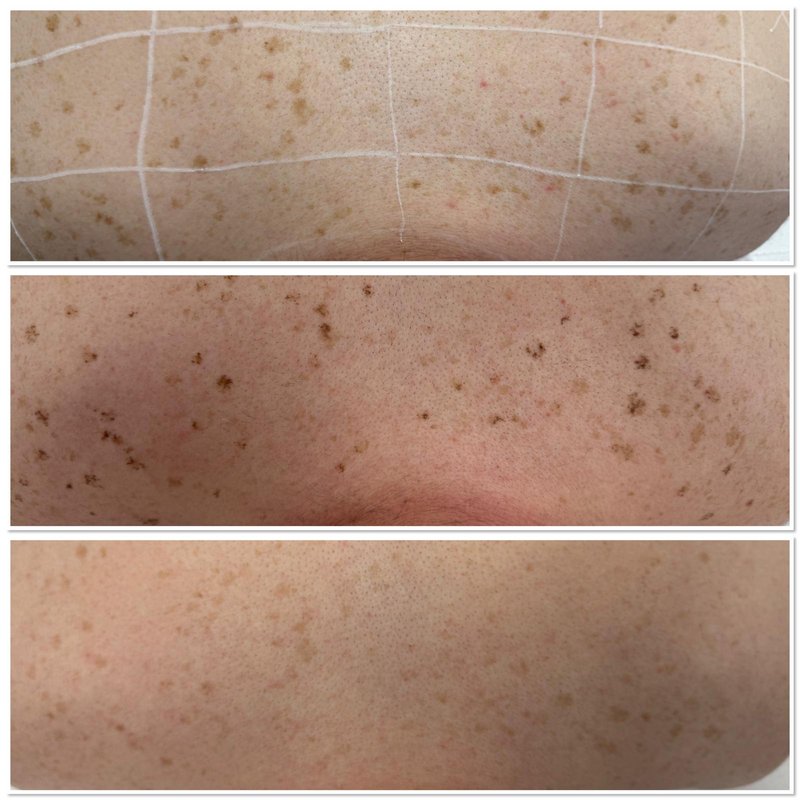
The 755nm Alexandrite wavelength is preferentially absorbed by melanin, the pigment that gives age spots and solar lentigines their colour. The energy heats only the targeted spot, not the skin around it.
Heat fragments the pigment cluster into smaller particles. The device's built-in cooling protects surrounding skin throughout each pulse, keeping the treatment comfortable.
Over the next 2 to 4 weeks the body's natural lymphatic clearance carries the fragmented pigment away. The treated spot darkens briefly as it lifts, then fades and falls away.
A couple of individual age spots or sun spots — quick, targeted, cooled throughout.
A small cluster or patch of pigmentation in one area.
A defined area, or several spots scattered across one region.
Widespread pigmentation, or several areas treated in one visit. Quoted after assessment — extent and skin type vary too much for a fixed price.
Larger work needs an in-person assessment. Skin type, sun history and the spread of pigment all change the protocol and session count. A consultation sets your starting point, settings and an honest plan.
Free consultation
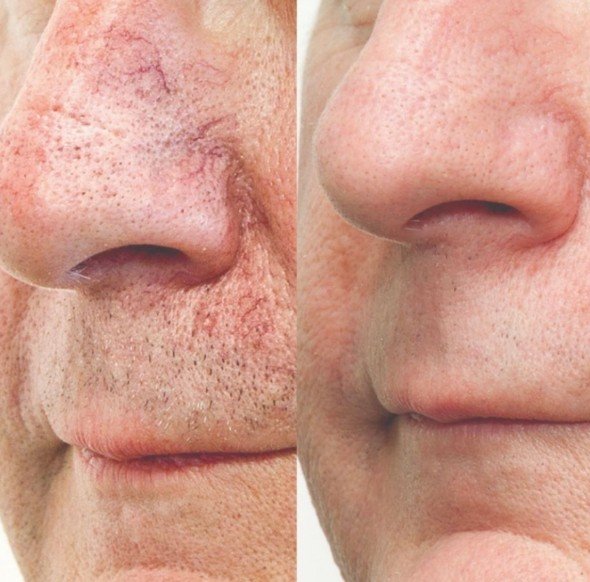
BOOK A FREE CONSULTATION →Broken capillaries on the cheeks and nose, cherry angiomas and persistent rosacea redness. The 1064nm Nd:YAG wavelength passes through the surface and is absorbed by haemoglobin inside the vessel — the vessel collapses and is reabsorbed by the body. Surrounding skin is left intact.
Most facial sessions take 20 to 30 minutes. Isolated lesions like cherry angiomas often clear in a single visit; diffuse redness and rosacea respond better across a course of three to six sessions spaced four to six weeks apart.
A short consultation comes first. We look at your skin type and the kind of redness you're hoping to treat, then plan the right laser protocol for your situation.
Suitable for all Fitzpatrick skin types I to VI thanks to the Nd:YAG's deeper penetration. Avoid alcohol, hot drinks and spicy food for 24 hours before treatment to reduce flushing during the session.
Sample clinical result — individual outcomes vary.
The 1064nm Nd:YAG wavelength passes through the skin surface and is absorbed by haemoglobin, the oxygen-carrying molecule inside the targeted blood vessel.
The vessel walls heat from the inside and collapse. Surface skin is shielded by cooling throughout each pulse, so the surrounding area stays unharmed.
Over the next 2 to 6 weeks the body reabsorbs the closed vessel and the visible redness fades from view, leaving no scar tissue behind.
Small-area treatment such as the nose or several smaller lesions. The 1064nm Nd:YAG wavelength heats cherry angiomas, spider veins or small visible vessels until they coagulate. Most resolve in one to two sessions.
Medium-area treatment such as a full-face session for broken capillaries, persistent redness and rosacea symptoms across cheeks, nose and chin. The Nd:YAG wavelength targets vessels deeper than IPL can reach. Significant improvement in one to three sessions.
Larger lesions, hands, décolletage, body. Atypical or extensive redness or vessel concerns treated case-by-case after assessment.
Redness & vessel variation needs in-person assessment. Vessel type, depth and density change how the Nd:YAG is set. The wrong settings on the wrong vessel waste a session at best and mark the skin at worst. A consultation establishes vessel type, treatment area, settings, and an honest session count.
Free consultation
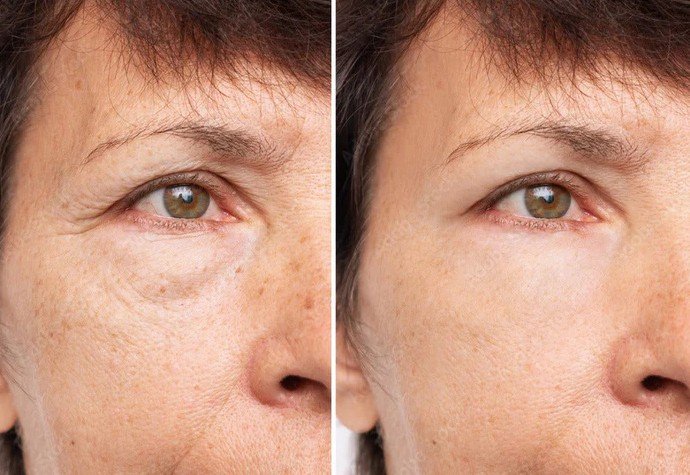
BOOK A FREE CONSULTATION →Non-ablative collagen stimulation across face and neck. Controlled thermal energy is delivered beneath the surface of the skin, triggering the natural collagen and elastin response over the weeks that follow. No surface damage, no managed downtime.
Each session takes 45 to 60 minutes depending on the area treated. The laser delivers controlled warming pulses across the surface in a measured pattern — clients describe it as a deep, comfortable warmth rather than uncomfortable heat.
Results build gradually as new collagen forms over the following weeks. Most clients see noticeable change after three sessions, with the full effect usually reached after a course of six spaced four weeks apart.
Safe for all Fitzpatrick skin types. Maintenance treatments every three to six months keep results in place; we'll talk through long-term planning at your consultation.
Sample clinical result — individual outcomes vary.
Non-ablative thermal energy is delivered beneath the skin surface in controlled pulses, warming the deeper dermis without breaking the protective outer layer.
Fibroblasts respond to the warming by producing fresh collagen and elastin. This rebuilding process happens gradually over the weeks and months following each session.
Texture, firmness and tone improve gradually as the new collagen settles into place. The cumulative effect across a full course delivers the most complete result.
Non-ablative collagen stimulation across the face. Warm energy delivered to the deeper layers triggers a new collagen and elastin response over the weeks that follow. No surface damage, no downtime.
Combined face and neck treatment. Same non-ablative collagen response with expanded coverage from forehead to décolletage.
Chest, hands, décolletage, body. Larger or unconventional areas treated case-by-case after assessment.
Body areas need in-person assessment. Skin thickness, sun history, and prior treatments all change how the laser is set. Rejuvenation outside the face responds differently and the protocol shifts to match. A consultation establishes treatment area, settings, and an honest session count.
Free consultation
BOOK A FREE CONSULTATION →30-minute appointment with our DMK MD Advanced practitioner. Skin assessment, history, photography. We agree the right treatment, the right course length, and your starting plan.
A small test patch on the planned treatment area, performed at the consultation or as a short follow-up. Required for every new client. We watch your skin's response over 48–72 hours before booking the first full session.
Sessions spaced four to six weeks apart, depending on category and skin response. Most clients complete their course in three to six months. Improvement builds visibly between sessions.
After the initial course, one or two top-up sessions per year keep results stable. We agree the cadence at your final course review.
Yes. The Candela GentleMax Pro PLUS uses two wavelengths — 755nm Alexandrite for lighter skin types and 1064nm Nd:YAG for darker skin tones — making it suitable across all Fitzpatrick skin types (I–VI), with the right wavelength selected at consultation.
The machine is the same, but the wavelength, energy and parameters are different. For hair, the laser targets pigment in the hair follicle. For skin, it targets pigment in a sun spot (pigmentation), haemoglobin in a vessel (redness & vessels), or warms the dermis without breaking the surface (rejuvenation).
Yes. Avoid sun exposure on the treatment area for two weeks beforehand. Don't use retinol or AHA products in the 5–7 days before. Come without makeup, fake tan, or perfumed lotions on the treatment area. We'll send you a full prep guide after booking.
Yes, and often we recommend it. Laser pigmentation pairs particularly well with DMK Even Tone for stubborn or recurrent pigmentation. Rejuvenation pairs with skin boosters or microneedling for compounded skin-quality results. Timing matters and we'll plan it at your consultation.
The patch test is our safety net before a full course. During the course we review progress at every session. If your skin responds differently than expected, we adjust the protocol or, occasionally, recommend an alternative approach. There's no penalty for changing direction.
Most pigmentation clears in one to three sessions. A consultation tells us your skin type, the depth and type of pigmentation, and your starting point.